
Loyalty Program
Unexpected experiences, generous benefits and exclusive rewards. Open the door to endless possibility and get ready to live life to the fullest with ALL, Accor's exceptional loyalty program.
Amid the modern rhythm of Ho Chi Minh City, there is a place where time seems to move more slowly. As evening settles, lanterns sway gently in the breeze, incense drifts softly through narrow lanes, and the sounds of street vendors weave into the steady hum of passing scooters. Together, these sights and sounds paint a vivid portrait of a neighborhood shaped by centuries of culture and community.
This is Cho Lon, Saigon’s historic Chinatown and one of the oldest Chinese settlements in Vietnam. Formed in the 17th century when Chinese migrants first arrived in the fertile south, Cho Lon officially merged with Saigon in 1931, marking the beginning of a long and colorful cultural exchange. Today, the neighborhood remains vibrant and full of life, where tradition and modernity coexist with quiet grace.
This guide leads you to eight iconic places within Cho Lon. Each street corner carries a story, each temple preserves a memory, and each marketplace hums with the energy of a community that has thrived for generations.
Saigon’s Chinatown is primarily located in District 5, extending into parts of District 6 and District 11. It is a bustling hub situated roughly fifteen minutes by car from the city center. From Ben Thanh Market, visitors can reach Cho Lon easily through several transportation options.
Transportation suggestions:
Every corner of Cho Lon has its own character. It may be the faint scent of incense drifting from temple courtyards, the lively calls of merchants within a market hall, or the glow of lanterns during festival nights. Below are eight destinations that capture the essence of Saigon’s Chinatown.
Address: 710 Nguyen Trai Street, Ward 11, District 5, Ho Chi Minh City
Hours: Generally open from morning to late afternoon
This revered temple is considered a spiritual landmark for the local Chinese community. Dedicated to the Goddess of the Sea, Thien Hau Temple embodies the hopes and gratitude of generations of migrants who looked to the ocean for safe passage.
The temple features distinct Cantonese architectural elements, including sweeping tiled roofs and intricately crafted ceramic reliefs. Soft daylight filters through the central skylight, illuminating swirling incense smoke and creating an atmosphere that feels both sacred and gently mysterious.
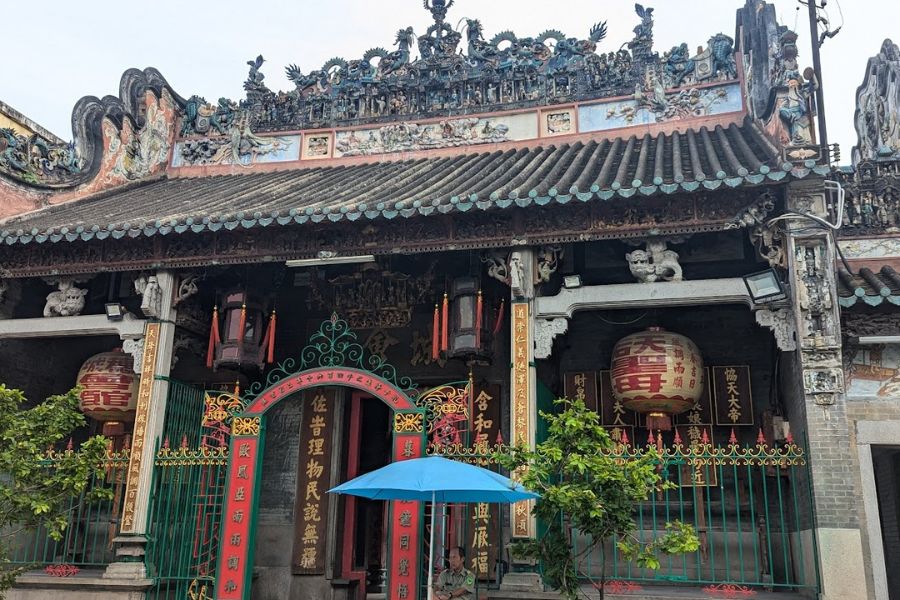
Source: Giang Le
Address: 57A Thap Muoi Street, Ward 2, District 6, Ho Chi Minh City
Hours: Approximately 7:00 to 18:00
Often called Cho Lon Market, Binh Tay Market is one of the city’s most bustling commercial centers. The architecture blends Eastern and Western influences with tiled roofs, airy corridors, and a spacious central courtyard.
Inside, you will find a vibrant world of activity. Stalls overflow with spices, dried goods, ceramics, handicrafts, and daily essentials. The market embodies the energetic spirit of Cho Lon, where commerce and culture intertwine.
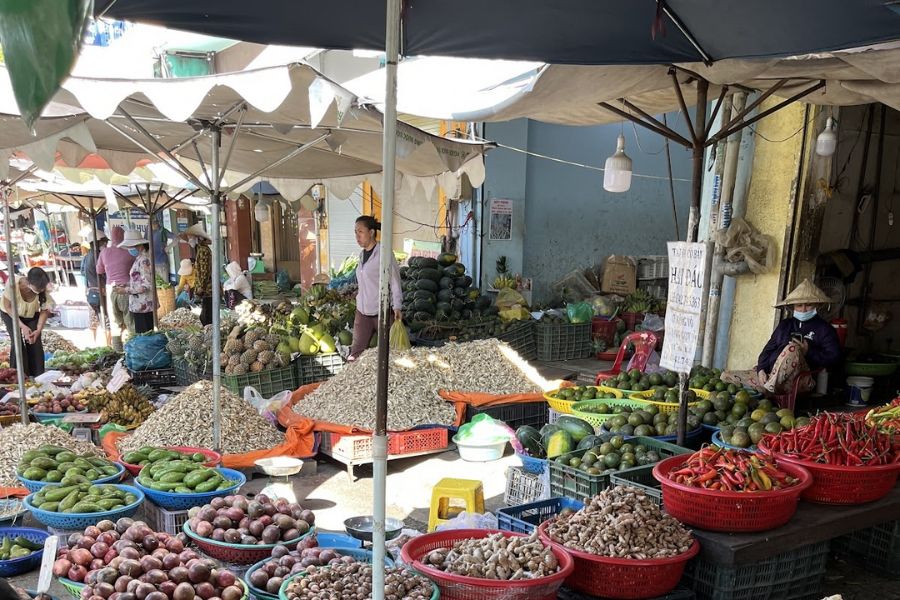
Source: Manfred Hirte
Address: 678 Nguyen Trai Street, Ward 11, District 5, Ho Chi Minh City
Hours: Typically open from morning until late afternoon
Nghia An Assembly Hall serves as a cultural and spiritual gathering place for the Teochew community. The hall honors Guan Yu, the symbol of loyalty and righteousness.
Its architecture is expansive and beautifully adorned with intricate wood carvings and elaborate ceramic art. Each detail reveals a blend of spiritual devotion and refined aesthetics that define traditional Chinese craftsmanship.
Address: District 5, Ho Chi Minh City
Hours: Shops open throughout the day, with varying hours
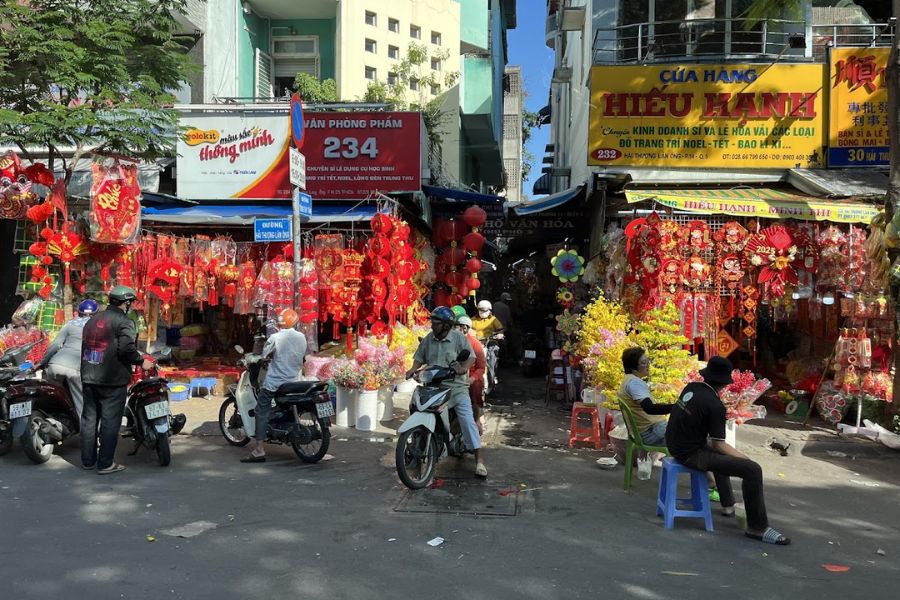
This historic street holds the distinctive aroma of traditional herbal medicine. Lining both sides of the road are long standing pharmacies filled with dried herbs, roots, and remedies rooted in centuries of Eastern healing traditions.
During the Lunar New Year season, the street transforms into a lively corridor filled with red decorations, festive ornaments, and shimmering lanterns. It is a short but meaningful stretch that preserves traditional practices and cultural heritage.
Source: Manfred Hirte
Address: 12 Lao Tu Street, Ward 11, District 5, Ho Chi Minh City
Hours: Generally open from early morning to late afternoon
Built by the Fujian community, this temple is dedicated to both Lady Thien Hau and Guan Yin Bodhisattva. The architecture reflects traditions from Southern China, featuring vibrant carvings and multi colored ceramic details.
Despite being located in the heart of the city, Quan Am Pagoda offers a peaceful refuge. The ringing of temple bells and the gentle rise of incense smoke create a serene atmosphere where visitors can pause and reflect.
Address: Ward 14, District 5, Ho Chi Minh City
Hours: Church grounds accessible throughout the day; indoor areas may have restricted hours
Officially named Saint Francis Xavier Church, Cha Tam Church is a rare example of a Roman Catholic church serving the Chinese Catholic community. Its exterior reflects Western Gothic influence, while the interior and surrounding features incorporate Chinese calligraphy and feng shui elements.
The blend of cultural design creates a distinctive charm that is both solemn and welcoming.
Address: Luong Nhu Hoc Street, Ward 11, District 5, Ho Chi Minh City
Hours: Especially vibrant in the evenings, particularly during the Mid Autumn season
Each Mid Autumn Festival, this narrow street lights up with thousands of handmade lanterns. Local artisans have preserved this craft for generations, creating lanterns in a variety of shapes, colors, and designs.
The atmosphere becomes festive and enchanting, offering visitors a dreamy backdrop for strolling, shopping, and capturing vivid photographs.
Address: 41 Hoang Du Khuong Street, Ward 12, District 10, Ho Chi Minh City
Hours: 8:30 to 17:00
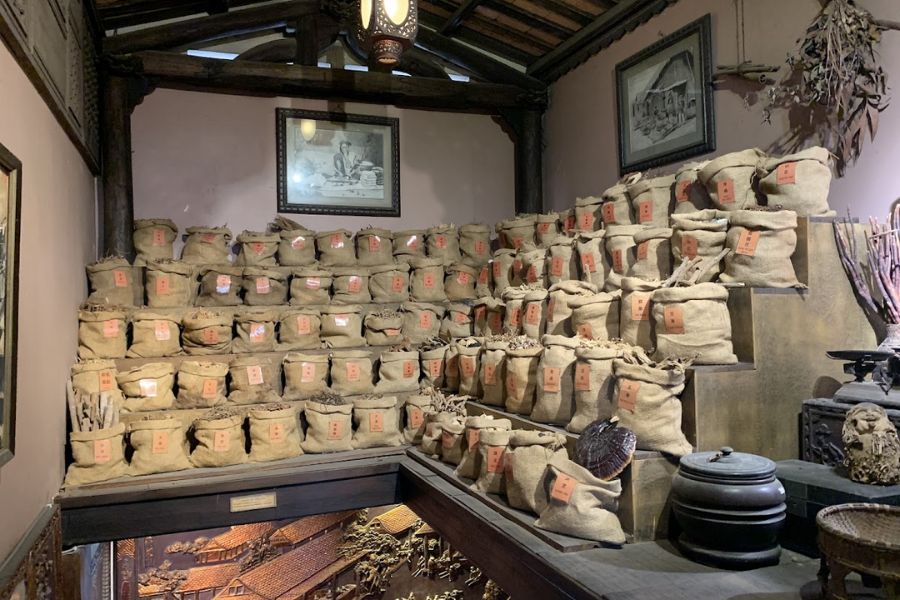
Located near the Cho Lon area, this private museum houses thousands of valuable artifacts related to Vietnamese traditional medicine, many of which share roots with Chinese medicinal philosophy.
The museum offers a thoughtful glimpse into Eastern healing arts, from herbal formulas and diagnostic tools to ancient treatment methods and wellness principles.
Source: quang minh Ta
From the perspective of Hôtel des Arts Saigon, a lifestyle hotel immersed in art and culture, Cho Lon is a rare gem that preserves the soul of old Saigon. It is a place where centuries old Chinese Vietnamese traditions remain alive in architecture, ritual, cuisine, and daily life.
Walking through these streets, you will feel history etched into brick walls and temple roofs, hear echoes of devotion in temple bells, and see community spirit in every gathering hall. Cho Lon is also a culinary haven filled with the harmonious flavors of Chinese and Vietnamese cooking. From hand pulled noodles to steaming dumplings and sweet soups, every dish carries the subtle imprint of cultural fusion.
For travelers who cherish culture, local life, and multi sensory experiences, Cho Lon offers an unforgettable journey. It is a place to listen, observe, and feel Saigon with your whole heart.
Follow our hotel on: